Showing posts with label Bull Island-Dublin. Show all posts

Monday, 15 October 2012

iwepts October 2012


What time did you have your alarm set Saturday morning?
5.45am for me, crazy time to be getting up I thought, (as I got up), but a 10.30am high tide meant we had to be at Bull island for 7.20am.
It was a cold morning.
Jumping up and down cold, and it didn't warm up.
I could hardly concentrate on my counts, Ger was banging his mitts together so much.

10 of us turned up, quite impressive.
I joined Ger and John on their section (south of the causeway to Sutton), numbers weren't massively high or low, loads more Brent, some RH mergansers, only 3 Shelduck, 1 Pintail, few Teal, Wigeon....
Lots of birders were out with their lenses looking for the Yellowlegs, but apparently it wasn't showing.

Due to our extra early start we were all counted, finished and sat having our coffees by 9.30am


John and Ger iwebbing - Oct 2012.

Saturday, 10 March 2012

Iwebs March 2012 - blub

Difficult to see what I'm writing here through the tears.
Today was the last iwebs count for 6 months.

*hand punch of joy into the air*

It has been interesting and of course I've enjoyed it, but I won't lie, it's the other iwebbers wot makes it. Ger, John, Philip, Tom, Jerry, Sinéad and especially Helen - big up and Respect.
Great to see Denis joining today too, as the iwebs PA, lovely handwriting.
Nice to have a Royal visit from Kendrew too, short but sweet flyby.

March 2012 iwebs was a very quiet and easy count, quite the opposite to last month's. TG.
Me and Philip covered sections 3 and 4, there were so few birds, it was great.

Bull island 08.36 March 10th 2012. Dull, but dry day. There was sun behind a load of cloud, but the cloud never really cleared so there was no sun shine = poor photos to follow.

Philip sporting this season's Farmer Chic look. Philip was well able to count all the Dunlins, Knot, Green shank and Grey Plover - the waders I simply wouldn't have been able for.

Section 3, Bull Island, Dublin Bay

I think we finished up by 11.30 and went for coffee (and scone, and sushi(!), and one of those natural bars that pretends to be healthy but is packed with sugar - yum).

I was really hoping the sun might give me a break so I could get some good light for some decent shots, but nope, it was poor light all day.
And birds seemed to be all really far off today too.

Little Egret, Bull Island, Mar 2012

Female Merlin, Bull Island, Mar 2012. Male would be grey on top and have a thick black tail band.

Meadow Pipit resting on a post near the golf course, pale sub moustachial. One of 'loads of Meadow pipits' at the Bull today.

Terrible photo of a Skylark, but just wanted to mention that there were thousands of Skylarks at the Bull today all singing and starring in their own sky shows, great to be in the audience.

Kestrel, grey head and grey tail = male kestrel, Bull island, Mar 2012

Male Kestrel, female would have a brown head and paler body

Male Kestrel, female would have barring across her tail and it would be browner, not plain grey as the male's above.

No Owls that I saw, Philip didn't see any either (he was there at dawn), Denis didn't see any (but nothing new there), neither did a couple of birders we met on the way back (possible urban birder sighting!) and I've just checked Irish Birding and no sightings, so I'm assuming the owls have finished their wintering at the Bull and gone off to their breeding grounds for a bit of summer lovin.
Happened so fast.

Sunday, 15 January 2012

2 SE owls, 2 Peregrines, 2 Merlins and a dead Skylark

HB, SC and me sen - The Point, Bull Island, Dublin, Sat 14 Jan 2012

Spent all day on Bull Island yesterday.

First was the January iwebs count (very low numbers of everything, not a single Little Egret) then I joined Helen and Sinéad who needed to see what roosted where at high tide.

If I write a quick list of our sightings -  you'll get the gist of the kind of afternoon we had:
  • 1 Merlin close up sitting, preening itself as we arrived and still preening itself as we walked away.
  • A Skylark lifted and was chased by a Merlin. Skylark flew a curve and escaped, another Merlin joined in the chase, so now we're watching 2 Merlins chasing the Skylark. Poor Skylark snatched midair by 1st Merlin only for the 2nd Merlin to try and pull the Skylark's body from the other Merlin's claws - all happening mid flight.
  • 'Short eared Owl!!' shout was called as one flew low over our heads, followed by 'There's Another'! Whilst swapping from binoculars to scope I lost sight of the SE Owls by focusing on a Peregrine Falcon which had gotten involved in the chaos.
  • 2 Peregrine Falcons sitting on the grass, each eating their own separate catches.

Didn't have my camera, so no shots, no bird photos, just happy memories.
Aaaaaaah.
until I think about the Skylark - so sorry.
Blub.

Thanks to Helen and Sinéad and John and Ger for a great day.

Howth Head from the Point, Bull Island, Dublin - yes in January! (taken on ipod)

Saturday, 10 December 2011

Iwebs December 2011

Sat 10th Dec 2011, Drimnagh 7.12am

Bull Island, 7.38am

Bull Island 7.39am

Bull Island, 7.42am

Bull Island 7.46am

Bull Island 7.47am

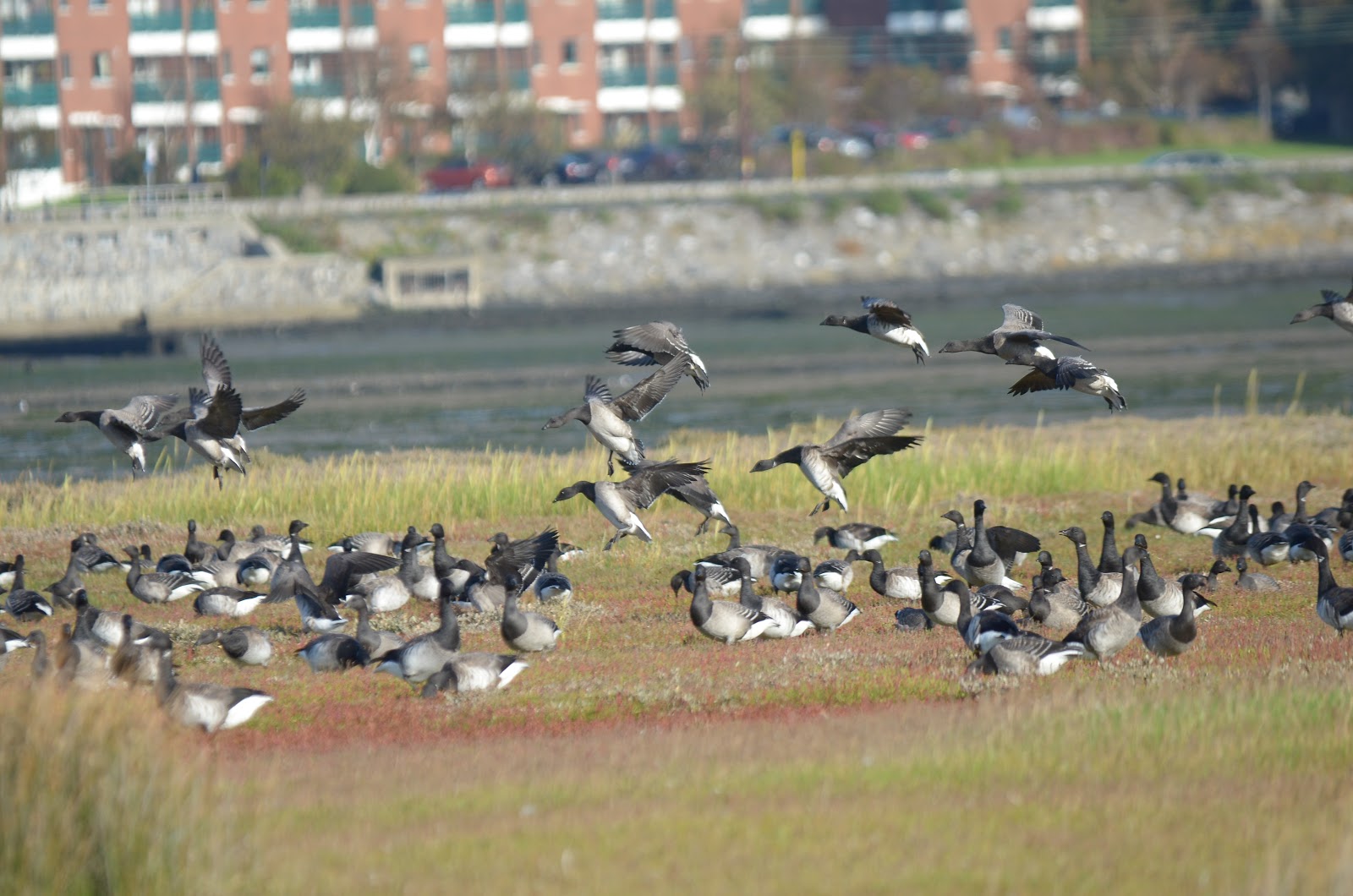
Brent Geese flying off, Bull Island 8am
Iwebs December 2011 was a cold 1º.
Multi layers and a bit of jumping around were your only options for keeping warm (hence the camera shake above).
The morning was beautiful though - dry, calm and really bright.

Myself and Tom counted section 3 and 4. I say myself and Tom, Tom counted every species except Brent, Oystercatchers and Shelducks. He flew through his lot, I was eyes wide at how quickly he could scan and count the section.
'40 years of birding and 10 years of helping with iwebs' he explained.
That's me sorted in 2021.

There weren't that many Brents to count, they all flew off by 8.20am! so including the 700 that flew off we counted a total of 1039.

Everyone finished their sections and we headed off for coffee by 9.45am.
I was half thinking of trying to stay around for the Wicklow Branch outing to the Bull at 12.30, but by 11am, we were all done for the day.
The sky had greyed over and the cold was starting to mess with my finely honed core temp, so with only a matter of moments to spare before my hands or feet dropped off I drove home.

Saturday, 26 November 2011

iwebs november 2011

Sat 12th November 2011
7.50am - 10am ish Bull Island, Dublin.
High Tide - noon.
1,887 Brent Geese
412 Oystercatchers.
They were my counts - and that was just south of the causeway.
Maseev amount of Brent - at 9am some were flying off to inland sites already.

7.51am, Bull Island, Dublin

7.52am, Bull Island, Dublin

7.53am, Bull island causeway (south)

Monday, 17 October 2011

560 Brent - 118 juveniles, Bull Island

Sunday morning was a beauty, blue skies and sunshine, so I was out my front door before 9am and back over at the Bull by 9.30am.
Main aim - to try and see the female Blue Winged Teal which has been hanging out to the left of the Causeway with the Shovelers.

Because it was early and the tide was still out, I decided to walk along the Alder marsh.
But before I set off, I noticed a few more Shelduck on the mud than were there yesterday.
A few weeks ago there were none at all, but as I stood there, I saw 20, then 40, then 60, so I decided to do a full count and counted 306!
Never before have I seen that many Shelduck.
Emailed the unusual total to Helen and she replied that herself and Sinead had spotted them yesterday after the iwebs count and figured that they had most probably just landed from Netherlands/ Wadden Sea because they weren't there an hour earlier!
Amazing.

Once I was along the alder marsh walk I saw a few Brent feeding on the Saltmarsh grass.
I counted 560 total including 118 juveniles - and I took footage!
I wanted to capture the sound of the geese, but on playback all you hear is the wind - but anyway, I also wanted to show how many juveniles were in the flock (the ones with whitish stripes on their backs are the youngsters).


Quite a difference from last year when there were hardly any juveniles in the flocks.


Brent Geese flying from one flock to join the main flock, Bull Island.

I waited a while to see if I could spot any tags on the Brent, but the grass was too long to see any.
Walking along, I wondered if I would see the Buff Bellied Sandpiper seen down this way, but I didn't.
Found out later I had got the location of where the 'Point' was wrong. I thought it was in front of the golf house, in fact it's way past there and nearer to Sutton - I didn't even know you were allowed to walk that far.

After a while I headed back to the main causeway, crossed over and walked the Salt marsh towards the wooden bridge.

Wheatear, Saltmarsh, Bull Island

I think this shot is cool! I got about 60 shots of this Wheatear, it was completely unphased by me being there. This is like one of those romantic dream images they use in magazines.

Same Wheatear, it actually did a lot of 'nothing' and standing around. Takin it easy like Sunday Morning.

Flock of c.200 Linnets and Goldfinch, Saltmarsh, Bull Island

Little Egret, Bull Island - saw 5.

Tide was rising and I scanned the flock of waders for Curlew Sandpiper, didn't see it.

Black Tailed Godwit, Bull Island.

18 of the 306 Shelduck, Bull Island.

Teal - didn't see the female Blue winged - but just look at that green speculum!

Also managed a shot of the Kingfisher! By fluke too, I was looking at the Heron and noticed it was perturbed, then saw the object of its irritation!
Great morning out at the Bull.

iwepts

'No, you don't need to be an expert, come along to the next iwebs count, we could do with extra volunteers for Dublin Bay' said Helen.
'OK, if you're sure'.
'Cool, see you at the Causeway, 10am Saturday'

The Causeway, Saturday 9.45am - how are you supposed to count that?!

I was a bit nervous.
Silly I know, but I was nervous I was going to mess up the count, get all the bird id's wrong and be really slow, everything that would make all the more experienced birders frustrated with me and forever more give me the cold shoulder.

But this was a decent bunch o'birders.
'Er, it's only counting' Helen reminded me, all smiles.
Everyone was all smiles.
Too many smiles?
Could they be trusted?
Hmmm, ok, ok, let's get counting.

Me, Dermot and Helen covered the area to the right of the Bull, first from the Wooden Bridge, then in front of Wongs, then Duck Central, where there was a huge number of Wigeon and Teal.

'If we start you on the easy birds Siobhan, start counting the Oystercatchers and we'll cover everything else'.
Ah, what an easy way to start.
I started counting my Oystercatchers and mentally freaked out.
It was like a mini comedy of errors, the  OC's were in a tight flock and because the tide was rising, the crazy OC's kept jumping over one another to be in the middle of the flock ( a flock of about 300).
I counted up to 7 of them several times until they'd jump over each other and mess up my count, no matter how fast I counted, they jumped over each other as fast.
I was going to have to admit defeat, it was impossible to count them individually.

'Ive finished counting all the Knots, Blackwits, Dunlin and Redshanks', said Dermot.
This was not what I wanted to hear.
'Er, the Oystercatchers keep jumping over each other and I can't count them.'
Morto.

'Just count them in groups of 5's, it'll be much easier' - and it was.

Oystercatchers successfully counted (849), I graduated onto Shovelers (12), Brent Geese (26) and Lapwings (51).
By noon we had finished our section and were back on the Causeway with all the others who had also finished their sections.
Dublin Bay and its 6 sections had been counted.

If you would like to help out with iwebs (counts take place once a month Sept - March all over Ireland) you should contact the iwebs national co-ordinator -  hboland@birdwatchireland.ie
Just keep your hands off the Oystercatchers in Dublin Bay - they're mine.

Wednesday, 5 October 2011

999 - 'hello, we're dying'

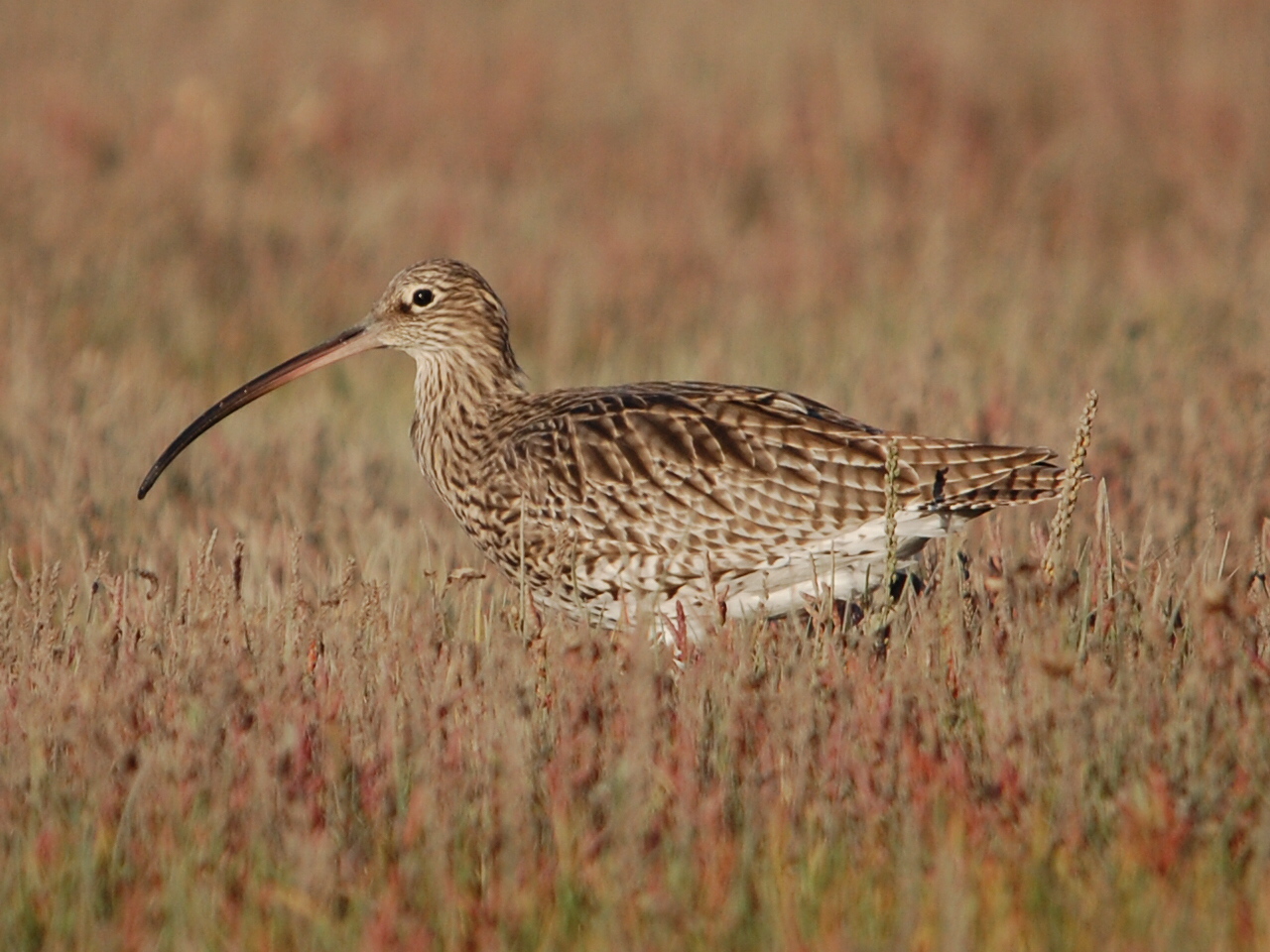
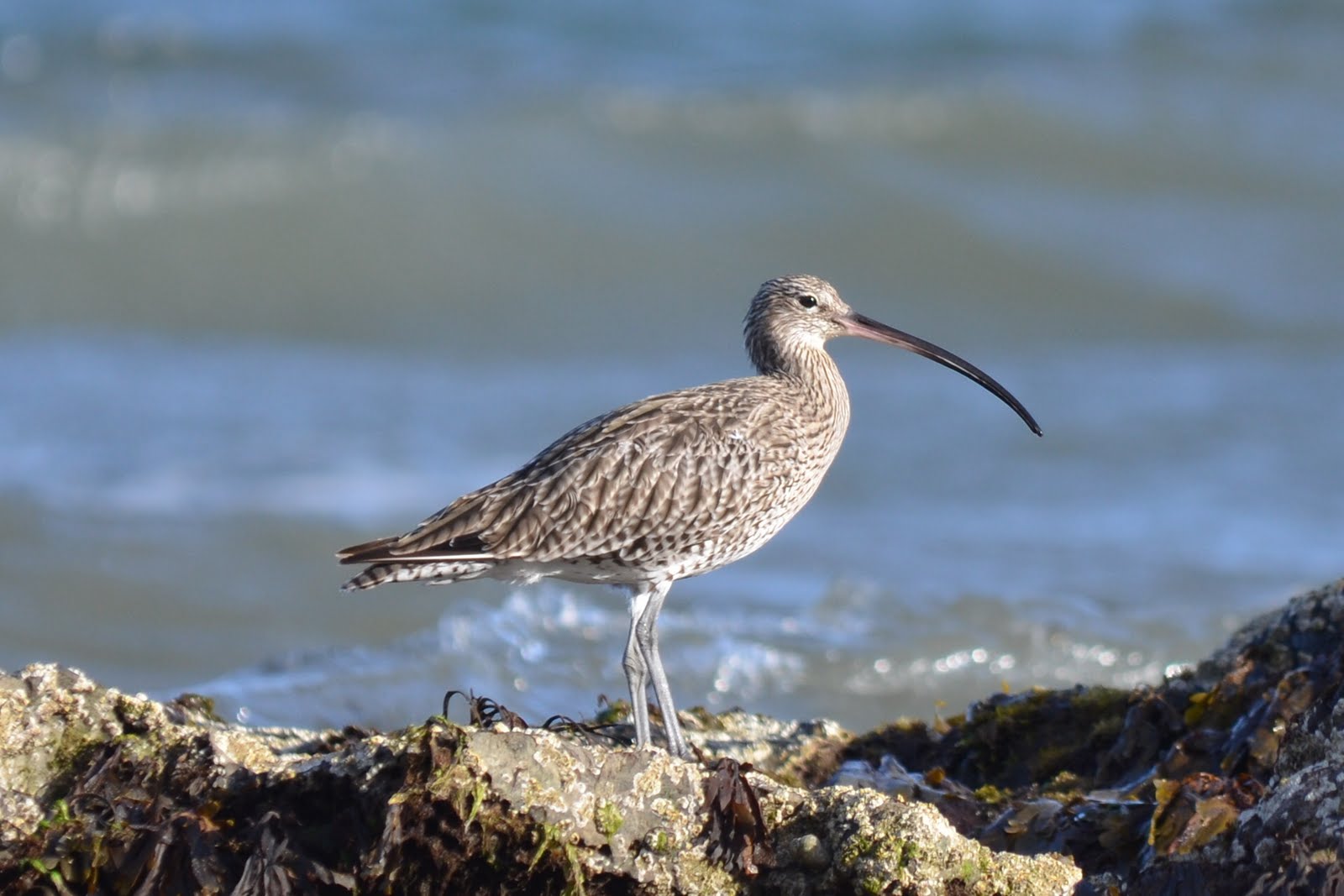
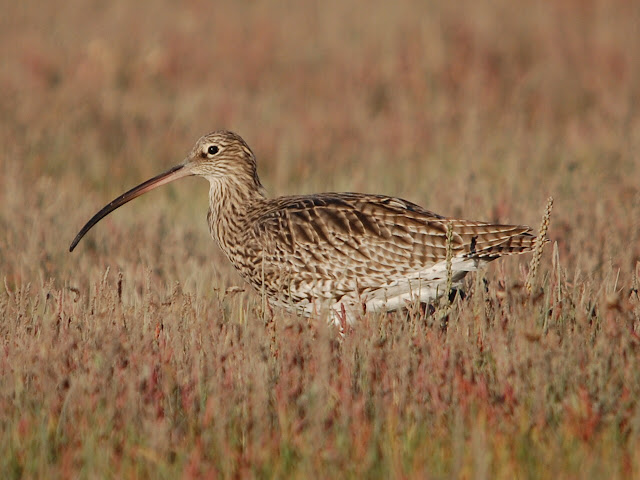
Photo of a Curlew I took at Bull Island last year.

'Hello, you're through to Emergency Services, which service do you require?'
'Hello, well we didn't know whether to call you or the Simon Community, see, we're all dying and we've also got nowhere to live'
'Oh dear. Well, I'm very sorry for you but I can't help, sorry - this is for important emergencies only - the human kind.'
'Oh, ok, thanks. Bye'

In the late 1970's there were an estimated 24,000 Irish Curlews living, breeding and happily prodding the mud all over Ireland.

As of October 2011, there's an estimated 300 (max) breeding pairs of Irish Curlew left in the whole of Ireland.
The boss of BWI reckons there's actually only about 100 breeding pairs left, but lets hope he's wrong.

Fact: For hundreds of years, Ireland has been one of the few countries where Curlews lived all year round. In a few years time, if we want to see a Curlew, we'll have to wait until Curlews from other countries come over to visit Ireland over the winter months.
So we will still see Curlews, but they'll just be visitors.
They'll leave again in Spring, leaving Ireland silent of Curlews until the visitors arrive again the next winter.

Using my calculator:
12,000 Irish breeding pairs (1970's) minus 300 Irish breeding pairs (2011)  = a loss of 11,700 breeding pairs.
That's a loss of 23,400 individual Curlews prodding the mud in Ireland.
Gone.
That's a loss of 97½ %.

97½ %.

Imagine walking all over Co.Donegal and then walking all over Co.Mayo - that's a mammoth amount of ground.
Only 8 Curlew nests were found in Co.Donegal and Co Mayo this year.
4 in Mayo and 4 in Donegal.
And you know all that moorland and heathland in Wicklow?
None in Wicklow.
There is a red dot on the map, but Niall whispered to me that it was a mistake, so Wicklow is bare of red dots. Red dots = confirmed Curlew breeding sites.

Taken from BWI Curlew Appeal page

My mum is from a place surrounded by farmland in Co.Kilkenny. Now living in Yorkshire, whenever she hears a Curlew she always says it reminds her of home.
In a few years time Ireland may never see (or hear) an Irish Curlew ever again.
The map will have no red dots.

Forests being planted, abandoned fields resulting in huge gorse growth and farmlands being too intensely farmed are the biggest causes of the decline.
Predators such as mink, crows, foxes, pine martins, humans and their dogs trampling on nests are other reasons for decline.
The Curlew is also a bird still listed as 'legal to shoot' in Ireland - though it is thought that hunters would never shoot a Curlew knowing their declining status - but still, it might be a good idea to remove the Curlew from the shooting list. Even if it is for appearances sake.

Curlews are happy to set up home and raise their young in open fields, meadows and amongst heather.
They like large open spaces where they can see predators approaching. They like dry areas (for the nest) which are close to muddy areas (where they can feed) and they like Marks and Spencer oxford pillow cases where they can rest their heads. Not really, they don't rest their heads, they just shut their eyes - but in comparison to us, they need very little.
They just need the right kind of habitat.
It's not too much to ask for really is it?

Birdwatch Ireland have estimated how much cash is needed to try and put into action everything they think they need to help this poor species out - €99,000.

So if there are any lottery winners or anyone who wouldn't miss a fiver in their pocket - you can donate to their Cry of the Curlew appeal at this link Birdwatch Ireland's Cry of the Curlew Appeal

If you're strapped for cash (and who isn't?), then maybe look out for ways to help volunteer or make sure report any Curlews you see next summer to Birdwatch Ireland.

Thankyou to Dr. Anita Donoghy (Birdwatch Ireland, Donegal) for the presentation last night to the South Dublin branch.

'Interesting talk, dismal message'.


Some further reading:
Article written in Irish Times Sat 24th Sept 2011:http://www.irishtimes.com/newspaper/weekend/2011/0924/1224304646862.html

Wednesday, 14 September 2011

Godwit Storytime

Remember this photo from Saturday?
When I wrote down the tags from the tagged Black Tailed Godwit in with c.300 others, Bull Island, Dublin?
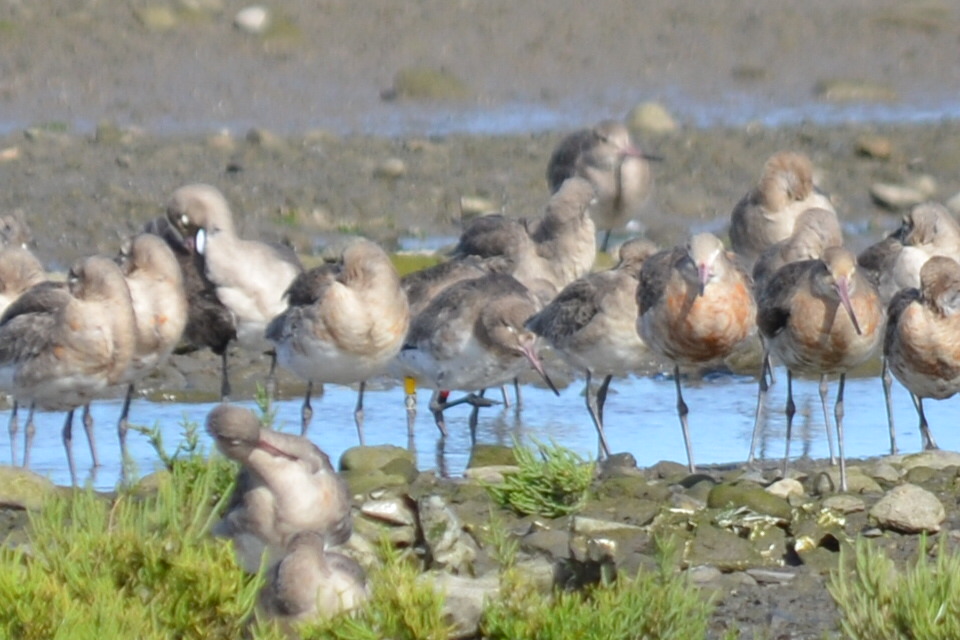
Blacktailed Godwit with tags Red, Black, Yellow, X

I asked Helen Boland (IWeBS Co-ordinator, Birdwatch Ireland) if she knew who I could report the tags to and straight away she gave me the email address of Pete Potts in the UK as someone who was probably involved with the ringing. (How on the ball and helpful was that?!).
I sent off my email and it turned out that Helen was spot on, in hardly anytime at all Pete emailed me back the following info:

Many thanks for the godwit record much appreciated.
RN YX is a bird we ringed in Siglufjordur on 11th July 2009 as an adult female and was seen on Tiree on 1st Aug 09 and then in Dublin 08/10/09 and again there Aug & Sept 2010. I wonder where it winters?

I had to look up where Tiree was (it's a small island in the Scottish Hebredies) and I google mapped Siglufjordur which is the very north of Iceland.

In nerdy fashion I've made this map to show the flight path of the female Godwit, (hopefully there should be blue placemarks you can click on to give reported tag dates).


(View RBYX - Black tailed Godwit in a larger map )

In addition to this info, Mark Carmody also spotted the photo of the tagged Godwit and emailed Rosemary who runs the brilliant Dublin's Tolka Branch website.
I received this forwarded email this morning:

"I noticed from the website that Siobhan McNamara had a ringed Black-tailed Godwit on the Bull island on the 10th September. The combination rang a bell with me so I checked my photographs. I was delighted that I did. I took a photograph of the bird just after it was ringed in Siglufjörður in northern Iceland on 11th July 2009!! The photograph is attached. Jim Wilson and I were in Iceland for 6 days taking photographs for the Shorebirds of Ireland book and we were helping Pete Potts and his crew ring some godwits while we were there.
Please post this up on the website as it makes an interesting story and raises the importance of checking the godwit flocks here in winter for ringed birds. If you could also pass this email onto Siobhan as I don't have her email address, I would appreciate it.
Best Regards,
Mark Carmody.

How about that then?!
It turns out that Mark personally held and released the very same Godwit in Iceland in 2009.

and there's the tags I spotted on Saturday ©Mark Carmody

So there you go.
From taking the initiative to record a tag, and with the help of Helen Boland, Pete Potts, Rosemary and Mark Carmody we end up with a bit of background to a bird which could easily have been glanced over as 'just another bird'.
Which it is, but now I know the history I delete the 'just' and award the bird some Respect for the journeys I now know she's managed to survive and the experiences she must have had along the way (for example, successfully dodging the Peregrine the day I saw her).
Through tagging and subsequent reporting not only are we helping important bird protection/conservation work, but we also get to hear a bit about the bird's story, something which if you're anything like me, you're likey to find very interesting.

Seeing as our Godwit friend hasn't ever been reported over Winter, Mark wonders if she moves even further down south to France or Portugal for the winter months?
In the interests of research I suggest we all get the first flights over to these places (bagsie Portugal) and keep an eye out for the Godwit.

Or - just keep an eye out at Bull Island and if this bird is spotted during Nov/Dec/Jan, let someone know.

Thanks to the following :
Helen Boland - IWebs Co-ordinator, Birdwatch Ireland - IWeBS
Pete Potts - 'Godwit King' - email Godwit sightings to pmpotts@tiscali.co.uk 
Rosemary - Editor of Tolka Branch website (great resource for Dublin Sightings/Events)
Mark Carmody - provided all images for Shorebirds of Ireland (new book 'Freshwater Birds of Ireland' out October 2011!) and his flickr page has amazing photos.

Sunday, 11 September 2011

Bull Island

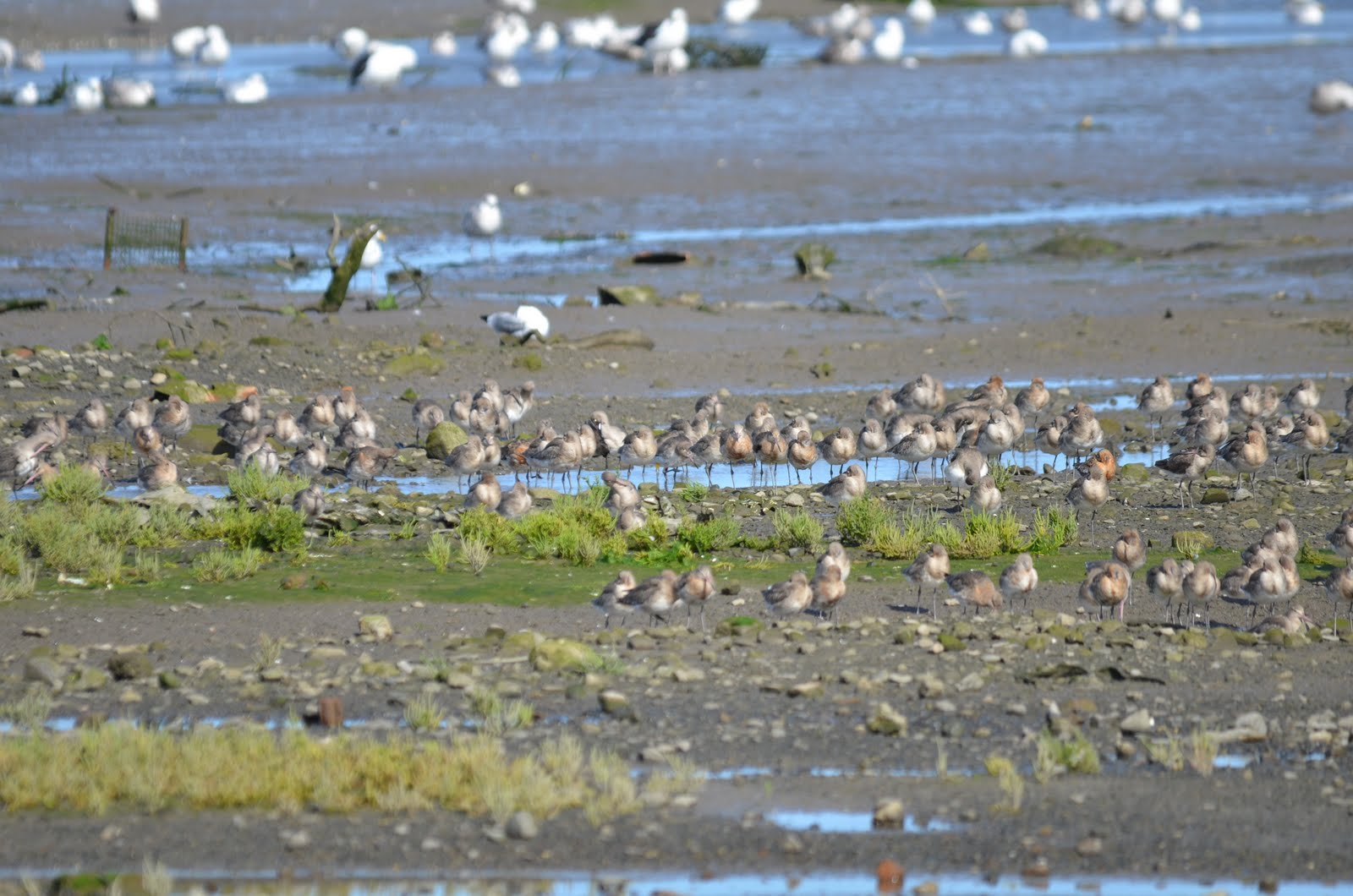
Bar tailed and Black tailed Godwits, Redshanks, Knots, Herring Gulls, Common Gulls
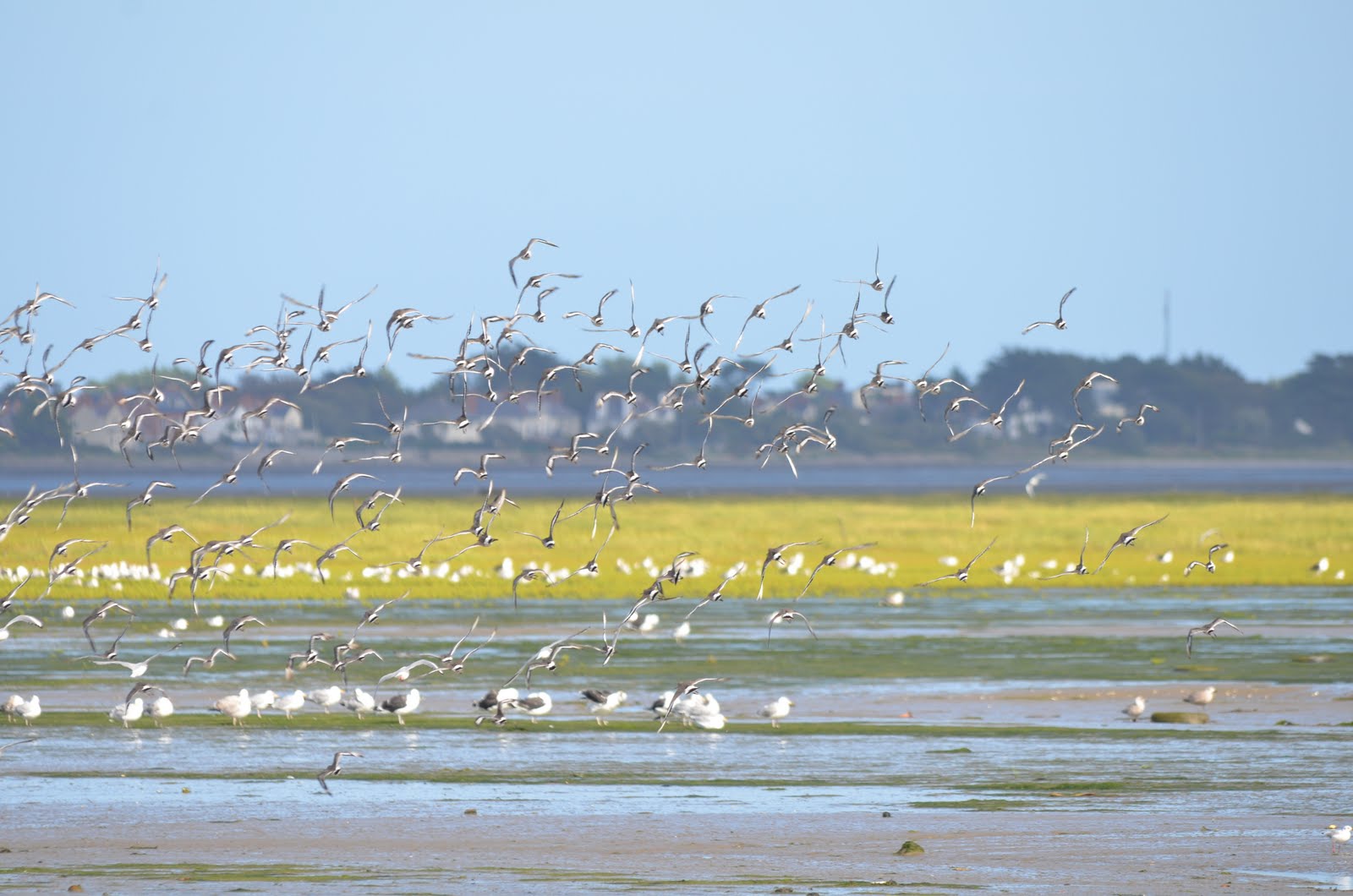
All lifted
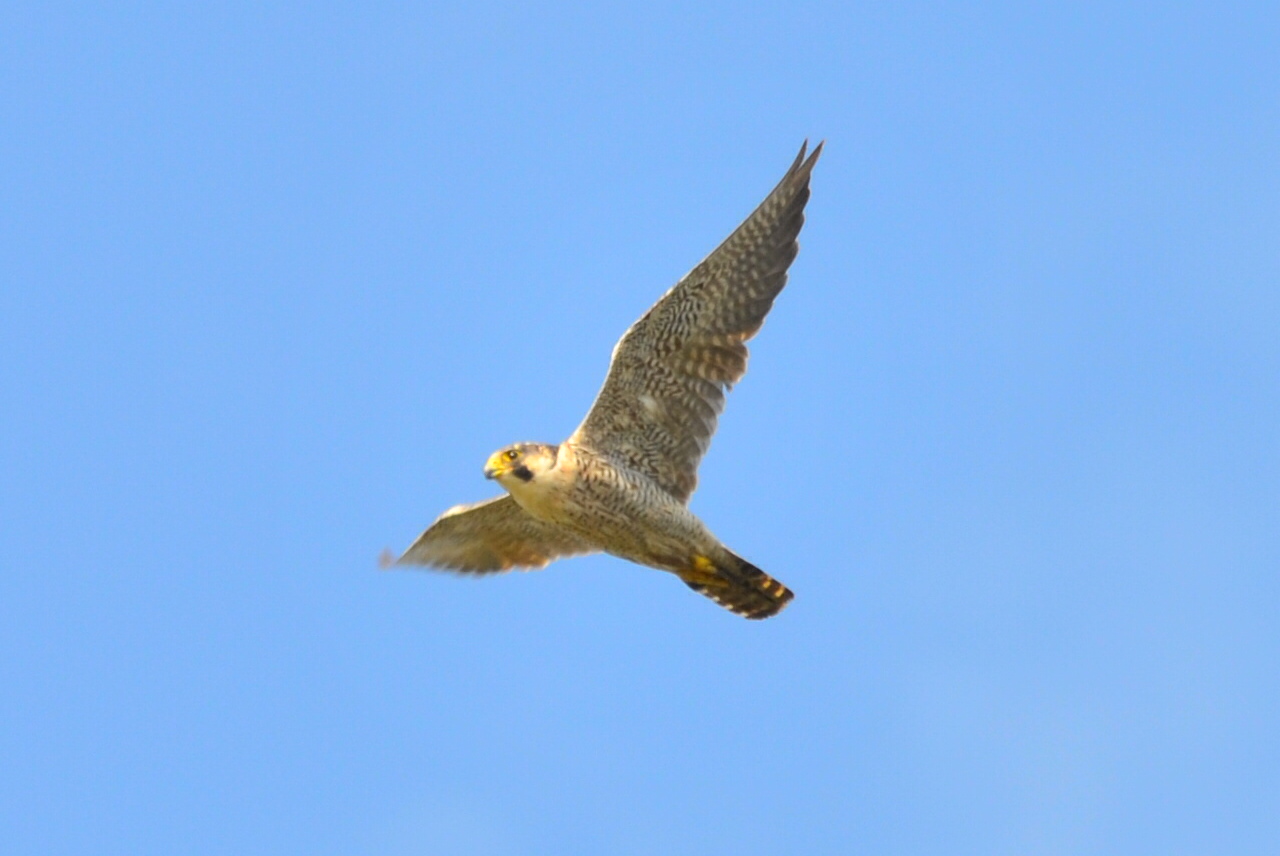
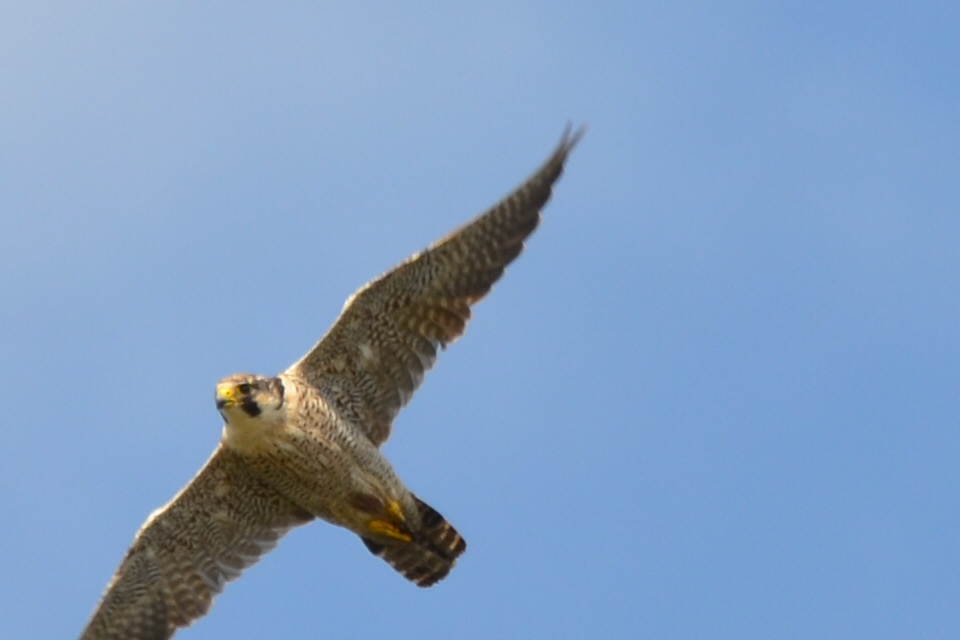
because of this beauty - Peregrine falcon, Bull Island
It didn't manage to get any of the birds this time.
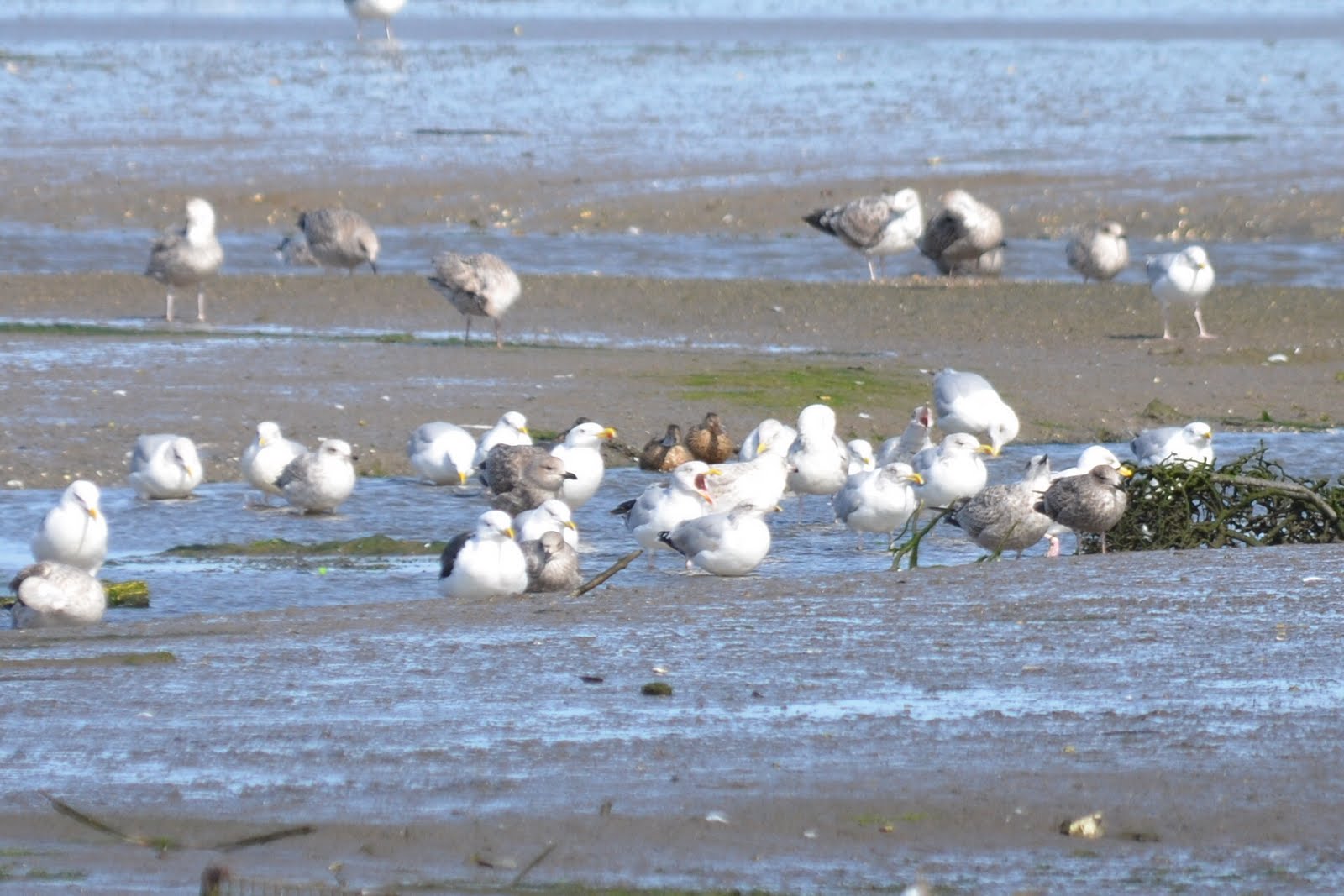
As if to mock the Peregrine, the Gulls start yawning - there are 3 Shoveler in the background
Spotted a tagged Black tailed Godwit Left leg Red, Black - Right leg Yellow and X on pale yellow, not sure who to report it to..
There were lots of Wheatears at the Bull today
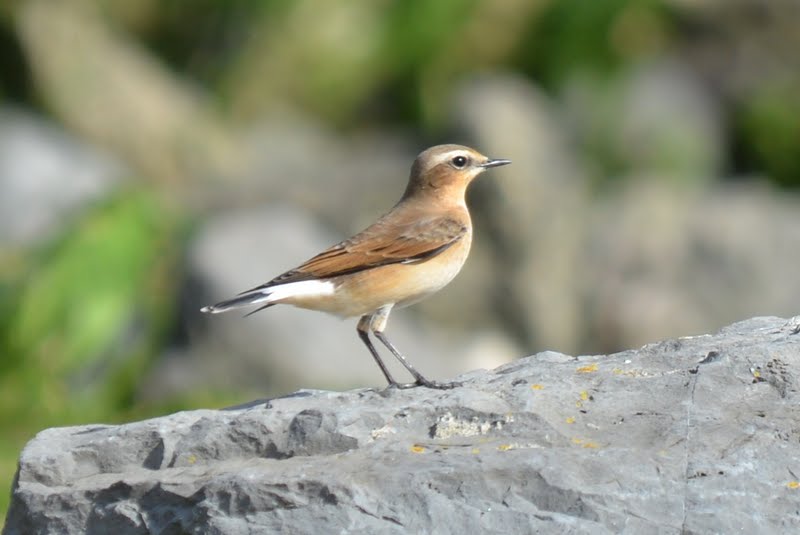
1st Winter Northern Wheatear, Bull Island - this was one of a group of 5
Sandwich Tern, Swords Estuary
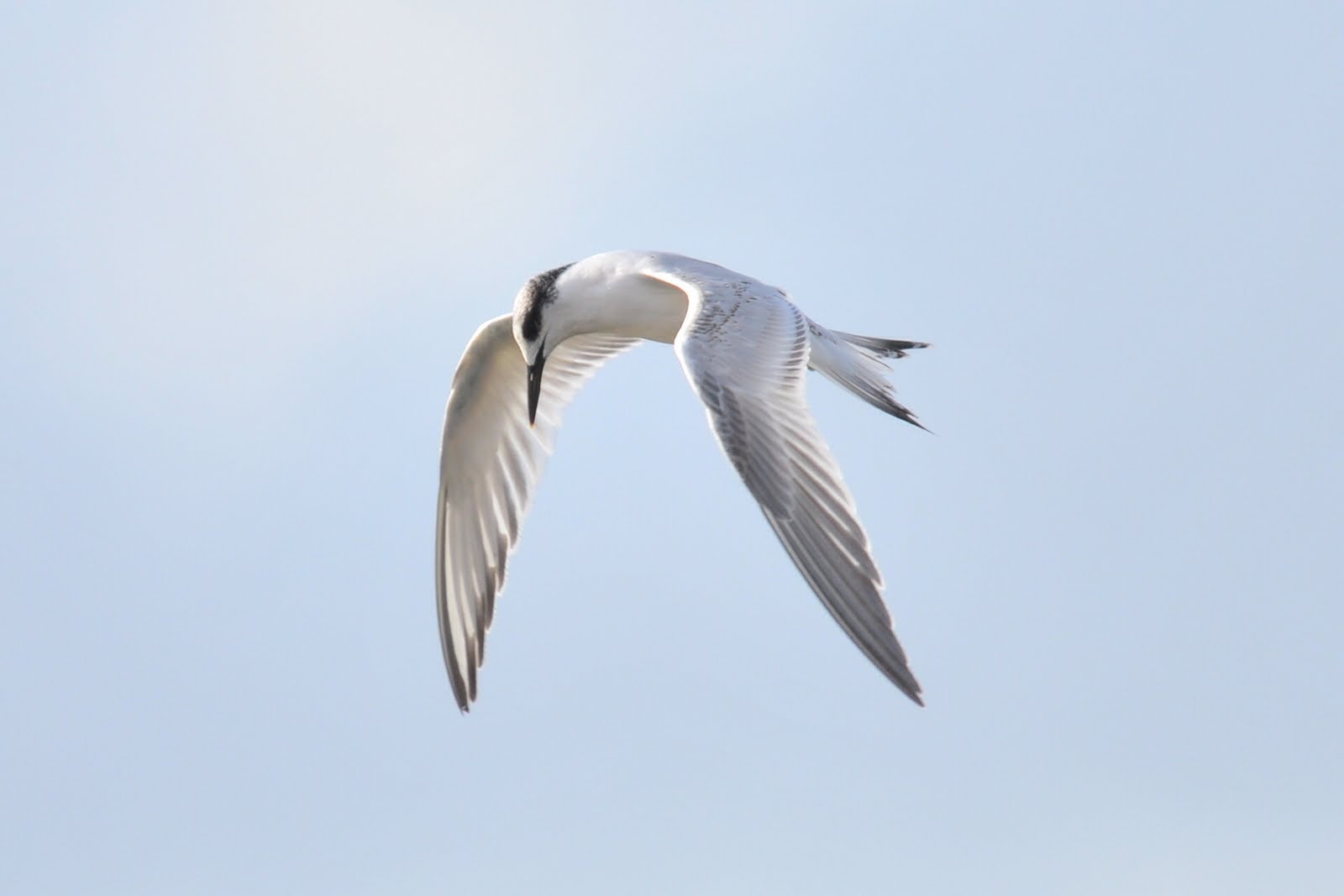
Juv Sandwich Tern (adult would have dark streaks on outer wings?), Swords Estuary, first of the Terns to arrive, last to leave.
Portmarnock, Co.Dublin, not bad for 10th September.
bit of a battered Curlew in flight, Portmarnock
Curlew getting a bit of shut eye, Portmarnock
Different Curlew, Portmarnock - much greyer shade of plumage
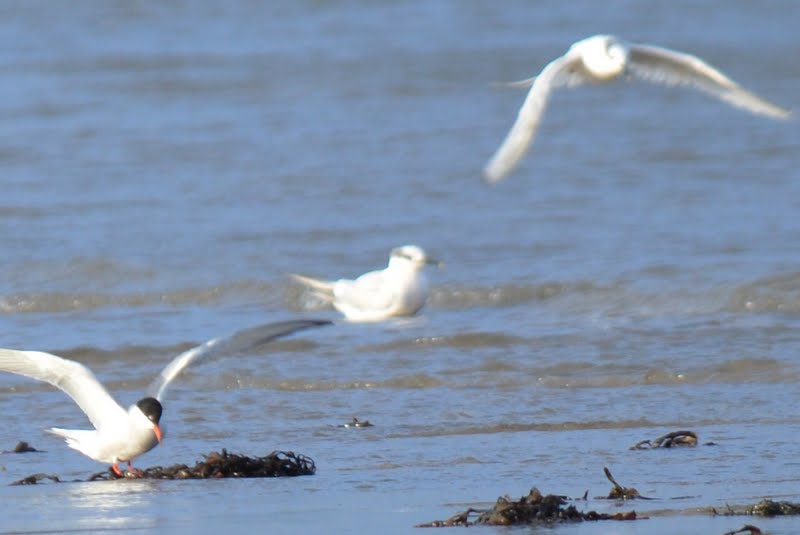
Common Tern, 2 Sandwich Terns, Portmarnock.
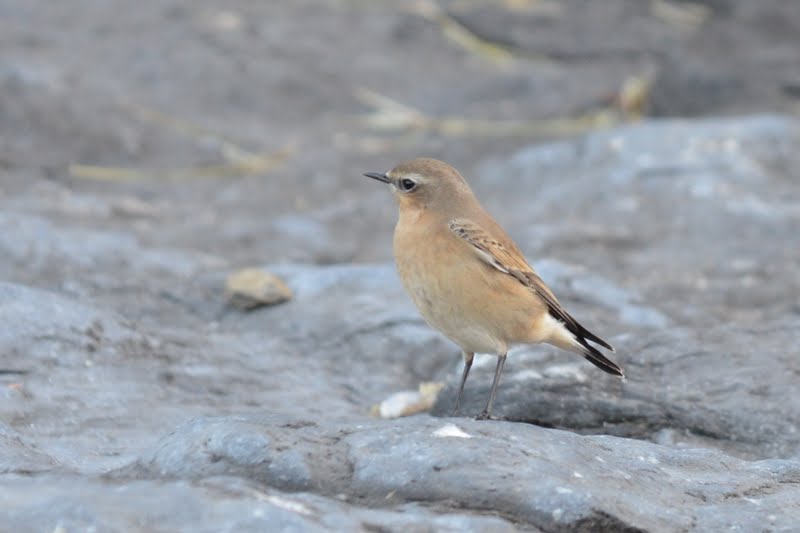
1st Winter Wheatear, Portmarnock
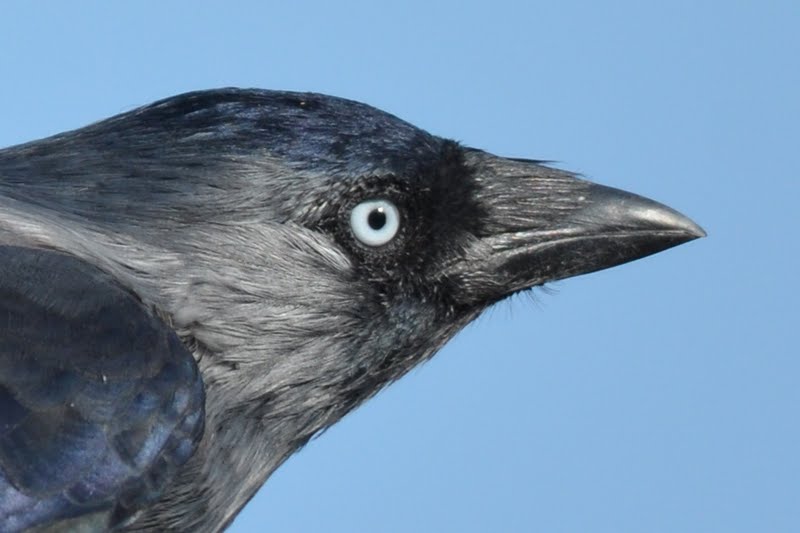
Jackdaw, Portmarnock
Jackdaw.
Watched this Hooded crow pick out periwinkles (?) from the rocks, fly up, drop the shells from a height onto the rocks so the shells smashed and the goodies inside the shell could be easily eaten
Heavenly voices from above
made this couple who were arguing hug and make up, aaaah.
So that was my day to Bull Island, Swords Estuary and Portmarnock.
Lots of Swallows still around and Sandwich Terns, saw only 1 Common Tern, no Swifts and no Sand Martins in the places I saw them in Portmarnock in Summer.